Introduction
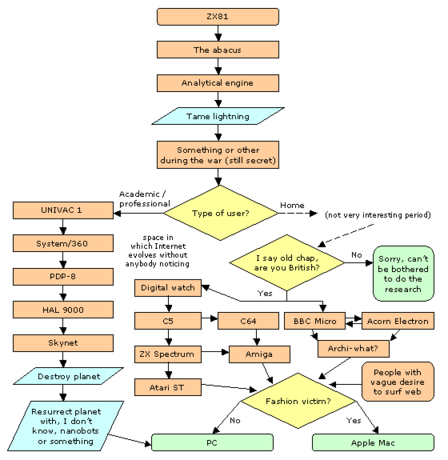
This module is an introduction to computation, as well as a brief overview of the history of computation.
The topics covered in this module will prepare you for the upcoming modules on numeral systems and high-level models for modern computers.
Prehistoric Computing
Our journey begins with the first human attempts to represent numbers as symbols. These symbolic numbers were mainly used for commerce or trade for counting and measuring.
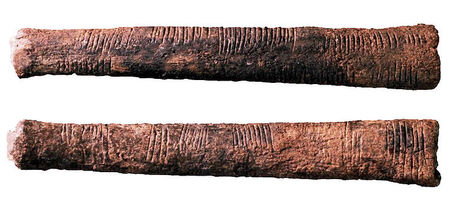
Tally sticks are known to have been used as far back as 35,000 BC to keep track of quantities using notches on stone, wood, ivory or bone.
Here we see the Ishango Bone dating back to 20,000 BC, a baboon’s fibula with a sharp piece of quartz affixed to one end. Very little is known about the use of this bone. It is theorized that the bone was used for counting, grouping or numeral system calculations.
Computing: 2400BC-1599
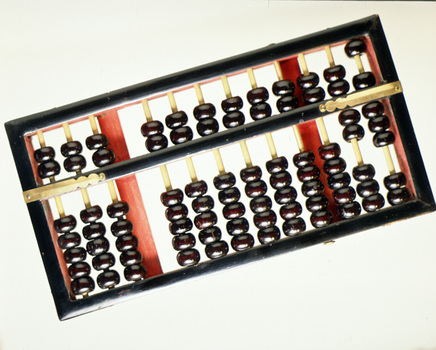
- 2400 BC: Abacus
- 300 BC: Pingala invents / discovers the binary number system.
- 724: First fully mechanical clock is a water clock invented in China.
- 900-1200: Various Persian and Arab Astrolabes and analog astronomical calculators
“Computers” in this era were mainly calculation aides like the Abacus. Automated mechanical devices were also being developed to keep track of the time and the locations of the planets and stars.
Important Math and Language Concepts for Computation
- 500 BC: First known use of zero in ancient India.
- 500 BC: Indian grammarian Panini formulates grammar of the Sanskrit language.
- 100 BC: Chinese Mathematicians first use negative numbers.
- 600 : First recorded description of place-value numeral Hindu-Arabic numeral system.
Resources
Video: The Abacus
Wikipedia Articles:
Computing: 1600-1799
- 1622: William Oughtred develops the Slide Rule
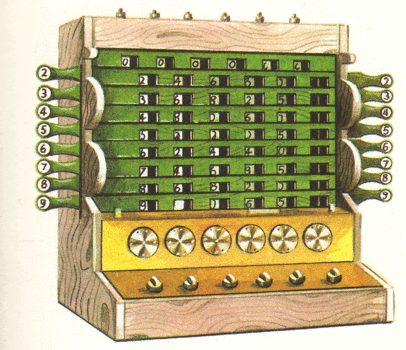
- 1623: First mechanical automatic calculator. German Polymath Wilhelm Schickard’s “Calculating Clock” capable of adding and subtracting 6 digit numbers.
- 1642: French mathematician Blaise Pascal builds a mechanical adding machine, the Pascaline.
- 1671: German mathematician Gottfried Leibniz perfects the binary number system.
“Computers” continue to be mechanical devices used by humans to perform complex calculations.
Resources
Video:
Wikipedia Articles:
Computing: 1800-1839
- 1801: French Silk weaver Joseph Marie Jacquard creates a automated loom controlled by punched cards.
- 1822: Charles Babbage design his Difference Engine, a two-ton system of gears and counters for the automatic tabulation of trigonometric functions.
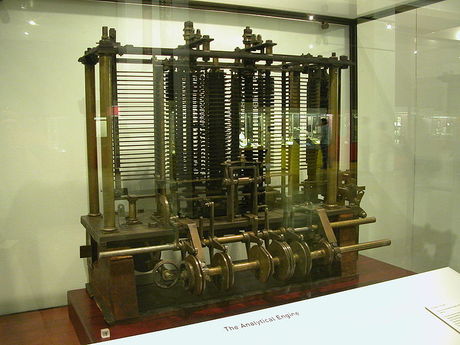
- 1834: Inspired by Jacquard’s loom, Babbage conceives of his Analytical Engine a punch card controlled computing machine capable of addition, subtraction, multiplication, division, comparisons and square roots.
The development of punch cards allowed computing devices to be programmed to repeat specific calculations without human intervention.
Resources
Video:
Wikipedia Articles:
Computing: 1840-1899
- 1842: Babbage’s friend Lady Ada Lovelace describes a method to use the Analytical Engine to calculate Bernoulli numbers. She is the world’s first computer programmer.
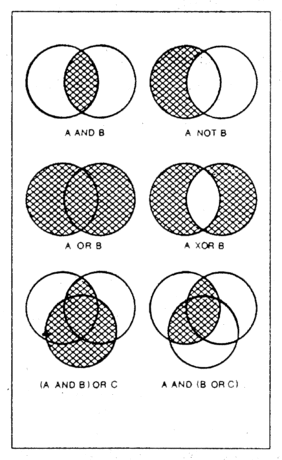
- 1847: George Boole develops a system called Boolean algebra, which can be used to solve logical and algebraic problems.
- 1890: Herman Hollerith wins the contract for US census data processing using a calculating machine capable of read and writing data to punch cards. Hollerith goes on to found the Tabulating Machine Company, later to become IBM.
This is the final era of pre-electronic computers.
Resources
Video:
Wikipedia Articles:
Computing: 1900-1949
- 1906: The Vacuum tube is invented by Lee De Forest.
- 1924: Alan Turing and Alonzo Church both publish works on possibilities and limitations of computation. Turing work includes the concept of the Turing Machine, a universal computational device.
- 1943: The Colossus was built Bletchley Park in England to crack German ciphers. It contained 2400 vacuum tubes and read punched tape at a rate of 5000 characters a second. It is considered the first programmable, digital, electronic computing device.
- 1946: ENIAC, another early digital computing device, is programmed by six female “computers”.
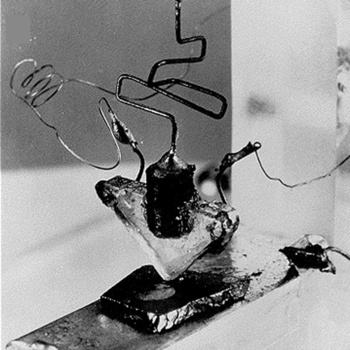
- 1947: Transistor is invented at Bell labs.
This is the start of the modern era of computing.
Computing: 1950-1979
- 1954: Work begins on the first high-level programming language FORTRAN (FORmula TRANslation).
- 1958: The integrated circuit is invented at Texas Instruments.
- 1958-1962: Tennis for Two and Spacewar! were the world’s first computer games.
- 1967: The floppy disc is invented.
- 1971: First microprocessor developed at Intel.
- 1975-1976: Microsoft and Apple are founded.
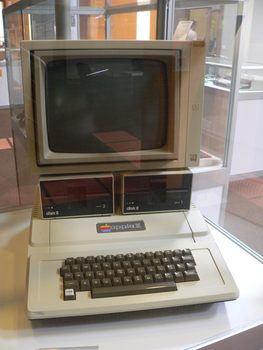
- 1977: Personal computers - Apple II, TSR-80, Commodor PET
The microprocessors from this era contained thousands of transistors and ran at clock speeds measure in Kilo Hertz (KHz) or low Mega Hertz (MHz).
Some modern microprocessors contain billions of transistors with clock speeds measured in Giga Hertz (GHz). (1GHz = 1,000MHz = 1,000,000KHz)
Resources
Video:
Wikipedia Articles:
Computing: 1980-1990
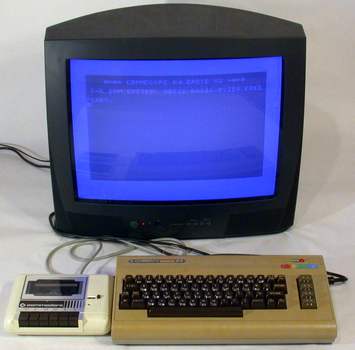
- 1981: Commodore introduces the VIC-20 with 3.6KB of memory.
- 1981: Microsoft DOS is release along with the IBM PC.
- 1982: Commodore 64 retails for $595 USD and through to 1994 17 million units are sold.
- 1984: The first Mac is released with a mouse-driven graphical user interface (GUI).
- 1985: The first version of Windows is launched. It runs as an application in DOS.
Resources
Video:
Wikipedia Articles:
Computing: 1990-2000
- 1993: Intel Releases the Pentium processor (66Mhz)
- 1993: MP3 file format published.
- 1994/1995: First versions of Netscape and IE web browsers.
- 1995: Java programming language released by Sun Microsystems
- 1998: Google is founded.
During this decade:
- The software and video game industries take flight.
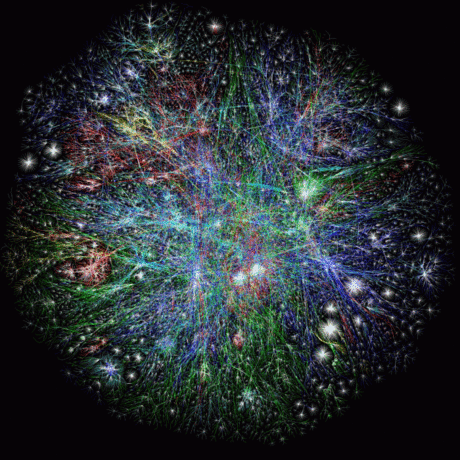
- Widespread usage of the Internet and the World Wide Web begins.
Computing: 2000-2009
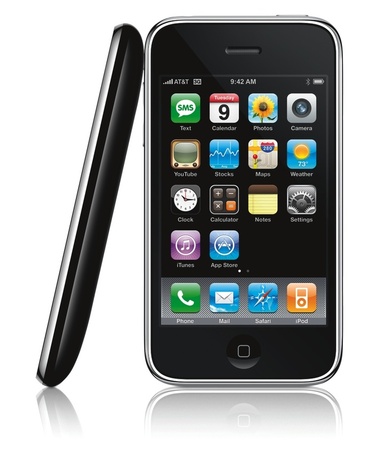
This is the decade of the Web and of wireless handheld computers.
- 2000: CPUs hit clock-speeds of 1GHz.
- 2002: First version of the Firefox Web Browser.
- 2004: First e-book reader with an e-paper display by Sony.
- 2006: Playstation 3 and Nintendo Wii are released.
- 2007/2008: The first iPhone and Android phones are released.
- 2008: Chrome Web Browser released.
- 2009: Online “Crypto-Currency” Bitcoin launched.
Computing: 2010-Present
This is the beginning of the era of ubiquitous computing and the “Internet of Things”.
- 2011: First version of the Wi-Fi enabled Nest Thermostat is released.
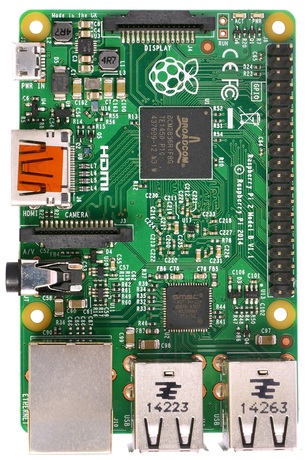
- 2012: Raspberry Pi a bare-bones $35 computer is released.
- 2012: Kickstarter for the Pebble Watch raises $10 Million.
- 2014: The first commercial 8-core desktop CPU is released by Intel.
- 2015: Apple Watch is released.
- 2015: Raspberry Pi 2 released. $35. 900Mhz CPU with 1GB RAM.
- 2016: Chip - $9! - 1Ghz CPU with 512 RAM, Wifi & 4GB HD.
Also: Personal quadcopters and other drones!